
Fun Facts Costa Rica: 25+ Eco & Wildlife Insights
Editorial Team · on 15 July 2026 · 13 min read · Last reviewed 15 July 2026
Fun facts Costa Rica are entertaining tidbits highlighting the country’s eco-diversity and wildlife, from sloths to rainforests.
In plain terms: Think of Costa Rica as Earth’s own theme park, where jaguars and toucans are the main attractions, and the rainforests are the roller coasters.
Key facts
- Costa Rica has **5% of the world’s biodiversity**, despite covering just **0.03% of the planet’s surface** (Source: National Geographic).
- The country abolished its army in **1948** and redirects those funds to education and conservation.
- Costa Rica is home to **over 500,000 species**, with **4,000+** of them being insects.
- **27% of Costa Rica** is protected as national parks or reserves, one of the highest percentages in the world.
What are 12 interesting facts about Costa Rica?
Here are **12 standout facts** that make Costa Rica a global treasure trove of natural wonders.
Costa Rica’s national animal is the **white-faced capuchin monkey**, famous for its intelligence and mischievous behavior. These monkeys use tools, such as rocks to crack open nuts, and are often seen in groups in the wild. The country’s nickname, the “Switzerland of Central America,” stems from its political neutrality and stable democracy, much like Switzerland’s reputation.
Costa Rica is one of the few places in the world where you can see **both Atlantic and Pacific oceans** in a single day. The country’s highest point, **Mount Chirripó**, stands at **3,820 meters (12,533 feet)** and offers breathtaking views of both coasts on a clear day.
**Tortuguero National Park** is known as the “Amazon of Costa Rica” due to its dense canals and waterways, which are home to **four species of sea turtles**: green, leatherback, hawksbill, and olive ridley. The park is accessible only by boat or plane, adding to its mystique. The **resplendent quetzal**, a vibrant green bird with a long tail, is Costa Rica’s national bird and a symbol of freedom. This elusive bird is often spotted in the cloud forests of **Monteverde**.
What are 10 surprising facts about Costa Rica?
Here are **10 surprising facts** that highlight Costa Rica’s unique charm and innovations.
Costa Rica was the first country in the world to **abolish its military** in 1948**, redirecting those funds to education and healthcare. This decision has contributed to the country’s high literacy rate of **97.8%** and a robust healthcare system that attracts medical tourists from around the globe.
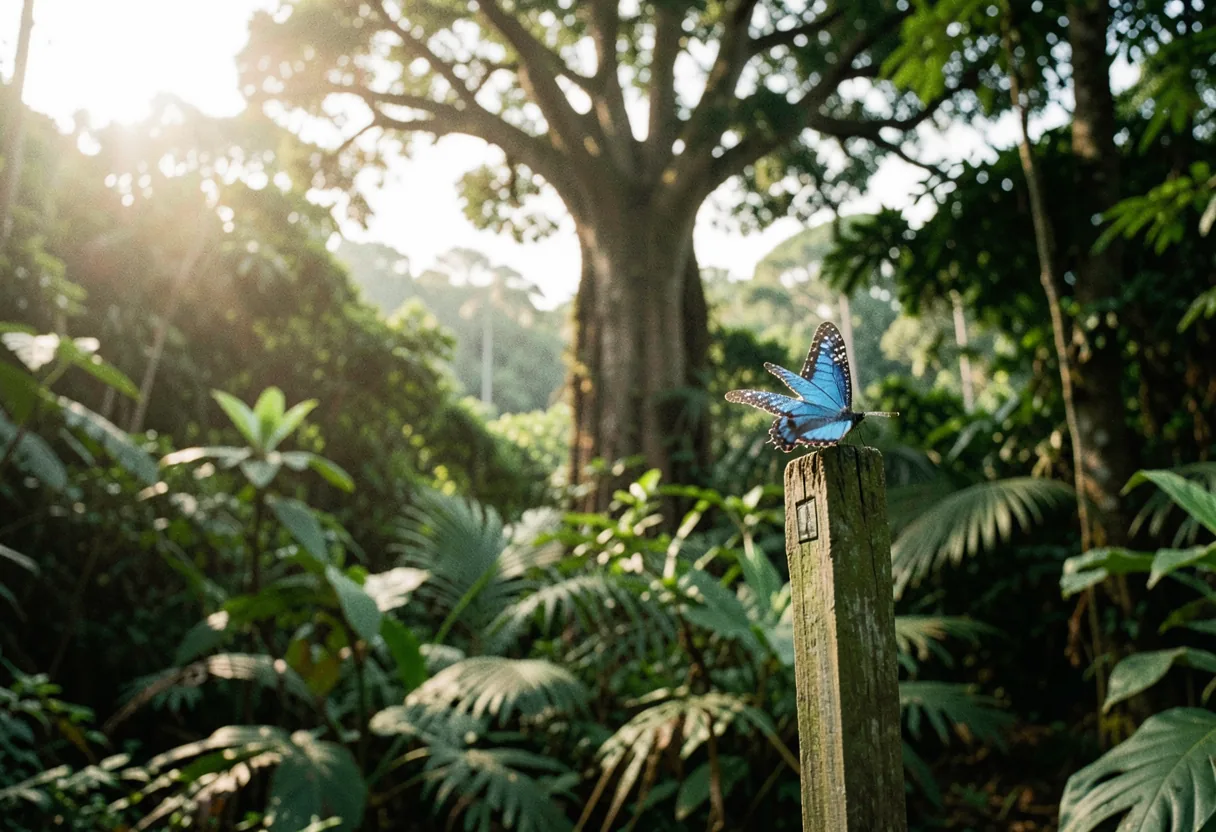
The **blue morpho butterfly**, one of the most striking butterflies in the world, is native to Costa Rica. Its wingspan can reach **up to 20 centimeters (8 inches)**, and it’s often seen fluttering through the rainforests. Costa Rica is a pioneer in **ecotourism**, with over **25% of its land protected** as national parks or reserves. The country’s commitment to sustainability has earned it the title of the **”Greenest Country on Earth”** by the Happy Planet Index.
**La Fortuna Waterfall**, one of Costa Rica’s most iconic natural attractions, plunges **70 meters (230 feet)** into a crystal-clear pool. The waterfall is located near the **Arenal Volcano**, one of the most active volcanoes in the country. Costa Rica is home to **over 1,400 orchid species**, which is about **6% of the world’s total orchid species**. The **National Orchid Garden** in **Santo Domingo de Heredia** showcases some of these stunning flowers.
The **Osa Peninsula** is often referred to as the “most biologically intense place on Earth” by National Geographic. This small peninsula is home to **2.5% of the world’s biodiversity**, including **jaguars, scarlet macaws, and four species of sea turtles**. Costa Rica is a leader in **renewable energy**, generating over **98% of its electricity** from renewable sources such as hydropower, wind, and geothermal energy.
What are 5 interesting facts about Costa Rica’s wildlife?
Here are **5 interesting facts** about Costa Rica’s wildlife that make it a paradise for nature lovers.
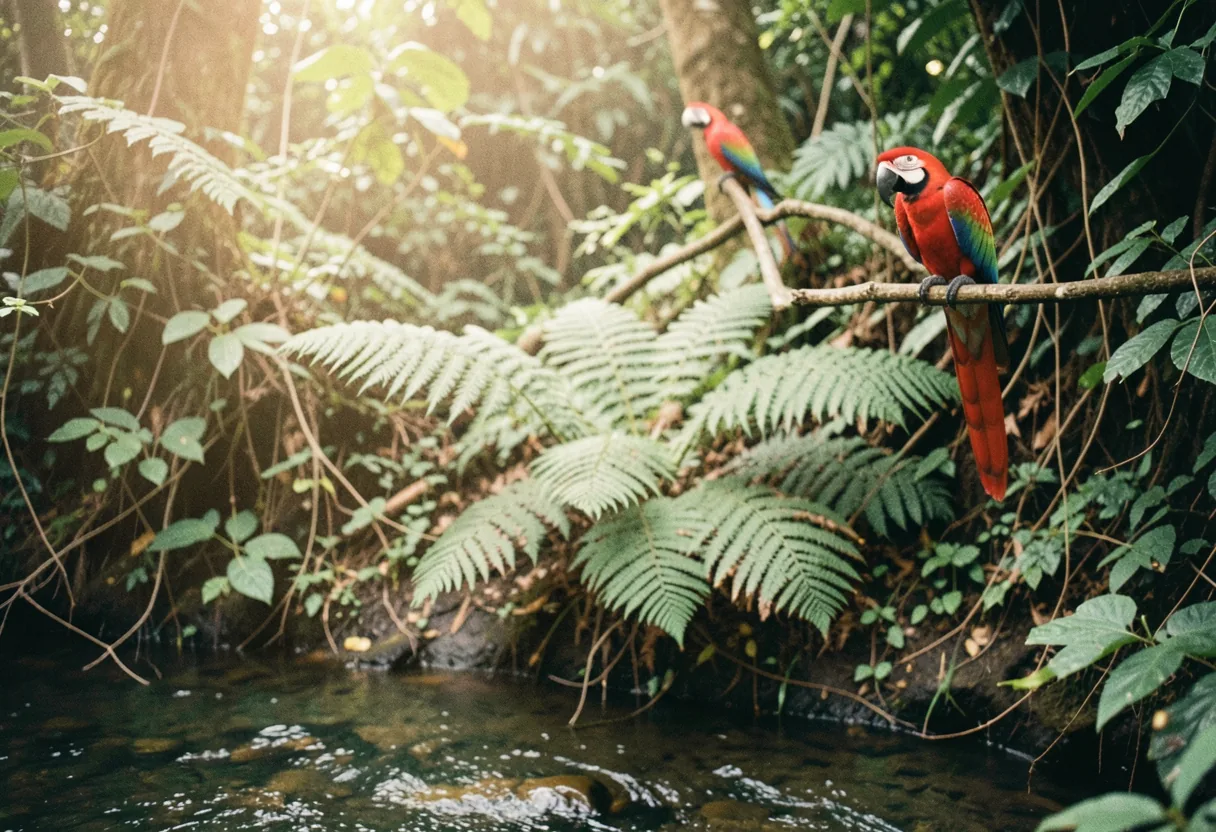
The **scarlet macaw**, with its vibrant red, blue, and yellow plumage, is one of the most iconic birds in Costa Rica. These birds are often seen in pairs or small groups and are known for their loud, raucous calls. Costa Rica is home to **two species of sloths**: the **two-toed sloth** and the **three-toed sloth**. Sloths are known for their slow movements and can sleep up to **20 hours a day**. The **jaguar**, the largest big cat in the Americas, roams the dense rainforests of Costa Rica. These elusive predators are rarely seen but play a crucial role in maintaining the balance of the ecosystem.
**Poás Volcano National Park** is home to one of the largest active craters in the world, measuring **1.6 kilometers (1 mile) in diameter**. The park is also home to the **Laguna Botos**, a beautiful blue lagoon formed in an extinct crater. The **toucan**, with its distinctive large bill, is a symbol of the tropical rainforests of Costa Rica. There are **six species of toucans** in the country, including the **keel-billed toucan**, which is known for its bright, multicolored beak.
What are 7 fun facts about Costa Rica’s culture?
Here are **7 fun facts** about Costa Rica’s culture that add to its unique charm.
Costa Ricans are known as **”Ticos”** (for men) and **”Ticas”** (for women). The word “Tico” comes from the Spanish word “rico,” which means “rich,” and reflects the country’s emphasis on simplicity and contentment. **Pura Vida** is the national motto of Costa Rica and translates to “pure life.” This phrase is used in everyday conversation and reflects the country’s laid-back and happy lifestyle.
The **oxcart (carreta)** is a traditional symbol of Costa Rica and is often seen in festivals and parades. These brightly painted carts were originally used to transport coffee and other goods. **Guanacaste Day** is celebrated on **July 25th** and commemorates the annexation of the Guanacaste province to Costa Rica in 1824. The day is marked by parades, festivals, and traditional dances.
**Soda** is a popular type of restaurant in Costa Rica, known for serving traditional dishes at affordable prices. These small eateries are often family-owned and serve as social hubs in local communities. **Folkloric dance** is an important part of Costa Rican culture, with the **Punto Guanacasteco** being the national dance. This dance is performed to the rhythm of a guitar and marimba and is often seen at festivals and celebrations.
What are the most amazing facts about Costa Rica’s eco-diversity?
Here are **some of the most amazing facts** about Costa Rica’s eco-diversity that showcase its natural wonders.
Costa Rica is home to **over 500,000 species**, with **4,000+** of them being insects. The country’s diverse ecosystems, including rainforests, cloud forests, and coral reefs, support an incredible variety of life. The **Monteverde Cloud Forest Reserve** is one of the most biodiverse places in the world, with **over 2,500 plant species** and **400 bird species**. The reserve is also home to the **resplendent quetzal**, a vibrant green bird with a long tail.
**Coral Reefs** off the coast of Costa Rica are home to **over 500 species of fish** and **60 species of corals**. These reefs are important for both marine life and coastal communities, providing habitats for fish and protecting shorelines from storms. The **Tortuguero National Park** is known as the “Amazon of Costa Rica” due to its dense canals and waterways, which are home to **four species of sea turtles**: green, leatherback, hawksbill, and olive ridley.
What are the most interesting facts about Costa Rica’s wildlife?
Here are **some of the most interesting facts** about Costa Rica’s wildlife that make it a paradise for nature lovers.
The **scarlet macaw**, with its vibrant red, blue, and yellow plumage, is one of the most iconic birds in Costa Rica. These birds are often seen in pairs or small groups and are known for their loud, raucous calls. Costa Rica is home to **two species of sloths**: the **two-toed sloth** and the **three-toed sloth**. Sloths are known for their slow movements and can sleep up to **20 hours a day**. The **jaguar**, the largest big cat in the Americas, roams the dense rainforests of Costa Rica. These elusive predators are rarely seen but play a crucial role in maintaining the balance of the ecosystem.
**Poás Volcano National Park** is home to one of the largest active craters in the world, measuring **1.6 kilometers (1 mile) in diameter**. The park is also home to the **Laguna Botos**, a beautiful blue lagoon formed in an extinct crater. The **toucan**, with its distinctive large bill, is a symbol of the tropical rainforests of Costa Rica. There are **six species of toucans** in the country, including the **keel-billed toucan**, which is known for its bright, multicolored beak.
What are some random interesting facts about Costa Rica?
Here are **some random interesting facts** about Costa Rica that add to its unique charm.
Costa Rica is one of the few places in the world where you can see **both Atlantic and Pacific oceans** in a single day. The country’s highest point, **Mount Chirripó**, stands at **3,820 meters (12,533 feet)** and offers breathtaking views of both coasts on a clear day. **Tortuguero National Park** is known as the “Amazon of Costa Rica” due to its dense canals and waterways, which are home to **four species of sea turtles**: green, leatherback, hawksbill, and olive ridley. The park is accessible only by boat or plane, adding to its mystique.
The **resplendent quetzal**, a vibrant green bird with a long tail, is Costa Rica’s national bird and a symbol of freedom. This elusive bird is often spotted in the cloud forests of **Monteverde**. Costa Rica is a pioneer in **ecotourism**, with over **25% of its land protected** as national parks or reserves. The country’s commitment to sustainability has earned it the title of the **”Greenest Country on Earth”** by the Happy Planet Index.
What are some more trivia about Costa Rica?
Here are **some more trivia** about Costa Rica that highlight its unique characteristics.
Costa Rica was the first country in the world to **abolish its military** in 1948**, redirecting those funds to education and healthcare. This decision has contributed to the country’s high literacy rate of **97.8%** and a robust healthcare system that attracts medical tourists from around the globe. The **blue morpho butterfly**, one of the most striking butterflies in the world, is native to Costa Rica. Its wingspan can reach **up to 20 centimeters (8 inches)**, and it’s often seen fluttering through the rainforests.
Costa Rica is home to **over 1,400 orchid species**, which is about **6% of the world’s total orchid species**. The **National Orchid Garden** in **Santo Domingo de Heredia** showcases some of these stunning flowers. The **Osa Peninsula** is often referred to as the “most biologically intense place on Earth” by National Geographic. This small peninsula is home to **2.5% of the world’s biodiversity**, including **jaguars, scarlet macaws, and four species of sea turtles**.
What are some interesting facts about life in Costa Rica?
Here are **some interesting facts** about life in Costa Rica that showcase its unique culture and lifestyle.
Costa Ricans are known as **”Ticos”** (for men) and **”Ticas”** (for women). The word “Tico” comes from the Spanish word “rico,” which means “rich,” and reflects the country’s emphasis on simplicity and contentment. **Pura Vida** is the national motto of Costa Rica and translates to “pure life.” This phrase is used in everyday conversation and reflects the country’s laid-back and happy lifestyle.
The **oxcart (carreta)** is a traditional symbol of Costa Rica and is often seen in festivals and parades. These brightly painted carts were originally used to transport coffee and other goods. **Guanacaste Day** is celebrated on **July 25th** and commemorates the annexation of the Guanacaste province to Costa Rica in 1824. The day is marked by parades, festivals, and traditional dances.
**Soda** is a popular type of restaurant in Costa Rica, known for serving traditional dishes at affordable prices. These small eateries are often family-owned and serve as social hubs in local communities. **Folkloric dance** is an important part of Costa Rican culture, with the **Punto Guanacasteco** being the national dance. This dance is performed to the rhythm of a guitar and marimba and is often seen at festivals and celebrations.
What are some funny entertainment facts about Costa Rica?
Here are **some funny entertainment facts** about Costa Rica that add a touch of humor to its rich culture.
Costa Rica has a tradition of **”fiestas patronales”** (patron saint festivals), where towns celebrate with parades, dances, and even bullfighting, though the bulls are often unharmed and the event is more of a spectacle than a sport. The **”Gallo Pinto”** (literally “spotted rooster”) is Costa Rica’s national dish, a simple but beloved mix of rice and beans. It’s so popular that some Ticos joke it’s the reason they don’t need a military, because the dish is so filling, no one has the energy to fight!
The **”Carnaval de Limón”** is a vibrant carnival held annually in the Caribbean city of Limón, featuring elaborate floats, dancing, and costumes. One of the quirky traditions is the **”Gigante y Cucuyo”** (Giant and Ogre) parade, where a giant puppet and a small, mischievous puppet chase each other through the streets. The **”Festival de la Luz”** (Festival of Light) in San José is a celebration of music, dance, and fireworks. One of the funniest moments is the **”Desfile de Mascaradas”** (Masked Parade), where participants dress in outrageous costumes and act out humorous scenes.
What are some amazing facts about Costa Rica’s wildlife?
Here are **some amazing facts** about Costa Rica’s wildlife that showcase its natural wonders.
The **scarlet macaw**, with its vibrant red, blue, and yellow plumage, is one of the most iconic birds in Costa Rica. These birds are often seen in pairs or small groups and are known for their loud, raucous calls. Costa Rica is home to **two species of sloths**: the **two-toed sloth** and the **three-toed sloth**. Sloths are known for their slow movements and can sleep up to **20 hours a day**. The **jaguar**, the largest big cat in the Americas, roams the dense rainforests of Costa Rica. These elusive predators are rarely seen but play a crucial role in maintaining the balance of the ecosystem.
**Poás Volcano National Park** is home to one of the largest active craters in the world, measuring **1.6 kilometers (1 mile) in diameter**. The park is also home to the **Laguna Botos**, a beautiful blue lagoon formed in an extinct crater. The **toucan**, with its distinctive large bill, is a symbol of the tropical rainforests of Costa Rica. There are **six species of toucans** in the country, including the **keel-billed toucan**, which is known for its bright, multicolored beak.
How do you find more trivia about Costa Rica?
To find more trivia about Costa Rica, explore its rich biodiversity, unique cultural traditions, and fascinating history.
The first time I really looked at Costa Rica’s biodiversity, I was amazed by the sheer variety of species in such a small country. From the **Monteverde Cloud Forest Reserve** to the **Tortuguero National Park**, each ecosystem offers a glimpse into the country’s natural wonders. For cultural insights, attend local festivals like the **Carnaval de Limón** or the **Festival de la Luz**, where you can experience the vibrant traditions and humor of Costa Rican life.
Reading books and articles about Costa Rica’s history and wildlife can also provide a wealth of trivia. For example, learning about the **abolition of the military** in 1948 and how it transformed the country’s priorities can give you a deeper understanding of its values. Exploring the country’s **national parks and reserves**, such as the **Corcovado National Park**, can also reveal fascinating facts about its wildlife and conservation efforts.
Key Takeaway
Costa Rica is a treasure trove of fun facts, from its incredible biodiversity to its rich cultural traditions. Whether you’re exploring its rainforests, attending its vibrant festivals, or learning about its unique history, there’s always something new and exciting to discover.
Frequently asked questions
What percentage of Costa Rica's land is protected as national parks or reserves?
Over 25% of Costa Rica's land is protected. That's 1.2 million acres dedicated to conservation, hosting 5% of the planet's biodiversity. Monteverde Cloud Forest Reserve alone shelters over 2,000 plant species and 400 bird types, including the resplendent quetzal.
How many sea turtle nesting sites does Costa Rica have?
Costa Rica has 28 nesting sites for four sea turtle species. The Ostional Wildlife Refuge on the Pacific coast is famous for its arribadas, mass nesting events where tens of thousands of olive ridley turtles arrive simultaneously, usually around November.
What is the significance of the Monte Alto Biological Corridor?
The Monte Alto Biological Corridor connects the La Selva Biological Station with Braulio Carrillo National Park. This 20,000-acre corridor is vital for wildlife movement, allowing jaguars, tapirs, and other species to migrate safely between fragmented habitats.
Why is Costa Rica a leader in renewable energy?
In 2019, Costa Rica ran on 98.1% renewable energy for 300 consecutive days. The country's heavy investment in hydropower, geothermal, and wind energy, like the 34.3 MW Orosi hydroelectric plant, showcases its commitment to sustainability and reducing carbon emissions.